What Google Ads for vets does for a clinic
- Vaccinations, spay and neuter, pet dental, puppy and kitten checks and emergency appointments each get their own ads and their own page.
- Emergency ads run only in the hours you can see an animal; routine ones keep to your office hours.
- Your ads show to pet owners inside the area you mark on the map.
- Searches that turned into bookings become exact-match keywords.
- Suggested changes wait for your tap, with an Undo button.
The searches that waste a vet's money
- "vet tech jobs" and "vet salary": people after work.
- "vet tech course" and "veterinary degree": students.
- "how to trim a dog's nails": DIY.
- "dog license": paperwork for the city, not a vet visit.
- "pet insurance" and "dog food": shopping, not an appointment. One tap blocks them.
Emergencies at night, vaccinations by day
"Emergency vet open now" at 10pm is an owner in the car with a sick animal. If you're open, that's a click worth paying for. If you're not, the schedule keeps your ad off and they find a clinic that is. By day, "puppy vaccination" and "cat spay" searches are people ready to book. Spring brings kittens and ticks; the morning check shows which searches are booking.
A page for spay and neuter, a page for dental
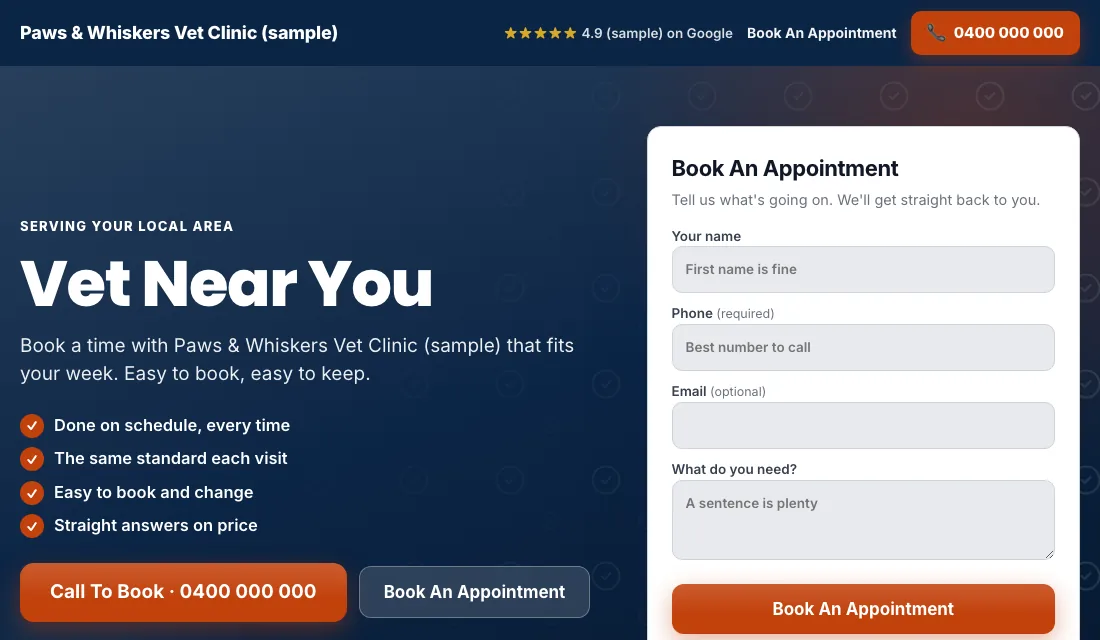
A "dog neuter" search should land on a spay and neuter page with your number at the top, not your home page. It builds one per service with a booking form, and counts every call and form. In Australia, consumer law says an ad can't mislead, and your veterinary board may have rules of its own. Either way, with Google Ads for vets you read every ad before a new campaign goes on. Dentists and physiotherapists fill their books the same way; the rest are on the full list.
What it costs
One price: US$299 a month. Book a call with Daniel to start. Landing pages, split tests and call tracking are included. Clicks are paid to Google, separately. That's Google Ads for vets with no contract: cancel with one click, and everything it built stays in your Google Ads.